
The AI agency opportunity isn’t coming. It’s already here.
But if you’ve been watching the space long enough, you’ve also noticed a pattern. New agencies launch with massive enthusiasm, sign up for a dozen disconnected AI subscriptions, and quickly drown in context switching, inconsistent outputs, and shrinking margins.
They don’t fail because AI doesn’t work. They fail because they’re trying to build a modern agency on a fragmented, outdated tech stack.
The agencies that scale aren’t the ones juggling the most tools. They’re the ones consolidating everything into a single, brandable, client-ready platform. If you want to launch a profitable white-label AI agency without the technical overhead, this is your blueprint.
The Real Opportunity (And Why Most New Agencies Stall)
The numbers don’t lie. The AI marketing technology sector recently crossed the $107.5B mark, while the broader global AI software market sits at $244B. Demand is exploding. Businesses know they need AI, but they don’t know how to implement it securely, consistently, or at scale.
That’s your opening.
Yet most aspiring agency owners step into this space and immediately make the same mistake: they try to stitch together a dozen specialized tools. One for lead generation. Another for content. A third for customer support. A fourth for CRM automation.
Here’s what that actually looks like in practice:
- Tool sprawl chaos: Managing 10-15 subscriptions drains time and budget.
- Inconsistent AI outputs: Different models, different prompts, zero brand alignment.
- Margin erosion: You’re paying for overlapping features while charging clients for fragmented results.
Research shows that consolidating fragmented AI and automation tools can cut IT overhead by up to 40% and drive productivity gains of 30%. For an agency, that’s the difference between scraping by and scaling profitably.
Step 1: Pick Your Niche and Define Your Offer
You don’t sell “AI.” You sell outcomes.
The most successful white-label AI agencies start by solving one specific, high-value problem for a well-defined audience. Instead of offering “AI services,” package your platform into clear deliverables:
Content Velocity Engine
For e-commerce and SaaS brands that need consistent blog, social, and email output without hiring a full creative team. Position this as a monthly retainer ($2,500-$5,000) where you’re the content production team.
Lead Generation and Outreach System
For B2B companies struggling with manual prospecting and low reply rates. Build this around “AI-powered sales sequences” that identify, qualify, and nurture prospects across email, SMS, and LinkedIn.
Omnichannel Support Automation
For service businesses drowning in repetitive customer inquiries across email, chat, and SMS. Position this as “24/7 AI support that learns your business.”
Pick one. Build your messaging around it. Once you’ve proven the model, you can expand your service stack. The agencies making six figures start narrow and scale methodically, not the other way around.
Step 2: Ditch the Fragmented Stack (The Consolidation Advantage)
Your clients don’t care how many tools you use. They care about consistency, security, and speed.
Running an agency on a patchwork of subscriptions creates three immediate problems:
1. Context Switching Fatigue
Your team loses hours daily toggling between platforms. One tool for prospecting. Another for email sequencing. A third for content. A fourth for reporting. Each context switch costs 23 minutes of productive time to regain focus. Over a month, that’s 40+ hours of wasted productivity per team member.
2. Data Silos
Client information is scattered across CRMs, drives, and third-party apps. When your AI tools can’t access your client’s knowledge base (Google Drive, Notion, Confluence), every output is generic and often wrong. You end up manually editing everything, which defeats the whole purpose of automation.
3. Security Risks
Consumer-grade AI tools often train on user data, creating compliance nightmares for enterprise clients. If you’re feeding client data into ChatGPT Plus, you’re violating their data privacy expectations and potentially their contracts.
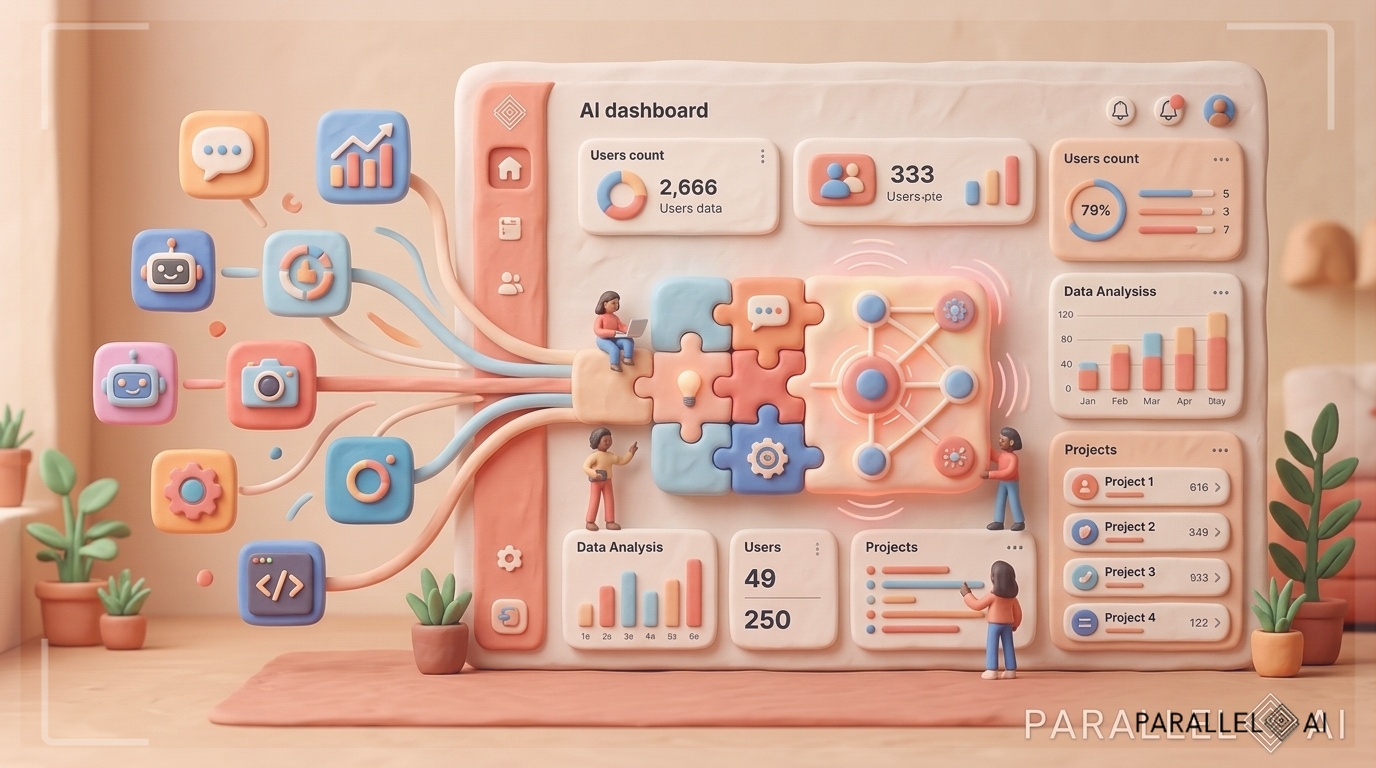
This is where a unified white-label platform changes things. Instead of building infrastructure from scratch or managing dozens of logins, you deploy a single system that handles prospecting, outreach, content creation, and customer support under your own brand.
Look for a platform that offers:
- Multi-model access: Switch between leading AI models (GPT-4, Claude, Gemini) based on the task without paying for separate subscriptions.
- Native knowledge base integration: Ground every AI interaction in your client’s actual data for accurate, on-brand outputs.
- Enterprise-grade security: AES-256 encryption, TLS protocols, and a strict no-training-on-customer-data policy.
- One-click white-labeling: Rebrand the entire dashboard, reports, and client-facing interfaces as your own.
- Multi-channel orchestration: Email, SMS, voice, and chat agents all pulling from a single knowledge base.
When your tech stack is unified, your delivery becomes predictable. When delivery is predictable, your margins expand.
Step 3: Price for Profit, Not Just Coverage
The fastest way to kill an AI agency is underpricing. Many new founders charge hourly or bundle services so cheaply that they can’t afford proper onboarding, monitoring, or client success.
Shift to value-based, tiered retainers. Here’s a proven framework:
| Tier | What’s Included | Ideal Client | Monthly Price |
|---|---|---|---|
| Starter | Smart lead lists (100 qualified prospects/month), 2-channel outreach sequences, basic content engine (4 pieces/month) | Solopreneurs, local service businesses | $1,500-$2,500 |
| Growth | Advanced lead scoring, omnichannel sequences (email, SMS, voice), custom knowledge base integration, 20 content pieces/month, monthly strategy calls | Mid-market SaaS, scaling e-commerce | $3,500-$6,000 |
| Enterprise | Full white-label deployment, custom AI workflows, unlimited users, dedicated success manager, on-premise/SSO options, SLA guarantees | Agencies, large consultancies, enterprise teams | $8,000-$15,000+ |
Notice what’s missing: hourly billing. AI scales. Your pricing should too.
Why This Pricing Structure Works
For you: Each tier represents a different level of complexity and results. Starter clients need basic automation. Growth clients need strategy and optimization. Enterprise clients need custom workflows and dedicated support. Your cost structure scales with the tier, but your margin stays healthy.
For clients: They see clear ROI before upgrading. A Starter client getting 100 qualified leads per month can easily calculate their payback period. When they see results, they move to Growth. When Growth becomes mission-critical, they move to Enterprise.
When you use a platform that consolidates content, sales, and support into one system, your delivery cost per client drops significantly. You’re not paying for five different tools. You’re paying for one unified solution that you resell at 3-5x cost. That’s where your profit margin lives.
Step 4: Launch, Onboard, and Scale
Speed to value is your competitive advantage. Enterprise buyers and agency clients don’t want six-month implementation cycles. They want results in days.
A solid white-label AI platform should let you:
Set Up in Under an Hour
Import client data, connect knowledge bases (Google Drive, Notion, Confluence), and configure sequences without IT teams or developers. Your client should be live and seeing results within a day.
Automate Prospecting
Use smart lists to pull targeted leads from large databases (200M+ prospects), qualify them against ideal client profiles, and trigger multi-channel outreach automatically. Your clients wake up to new leads in their inbox every morning.
Generate Months of Content in Minutes
Feed your brand guidelines and existing assets into a content engine that produces blogs, social posts, and marketing collateral that actually sound like your client. Not generic. Not robotic. Actually on-brand.
Handle Customer Interactions 24/7
Deploy AI voice and chat agents that pull context from your client’s knowledge base, resolve common issues, and escalate only when necessary. Customers get answers immediately. Your client’s team focuses on high-value work.
Because everything runs on a single platform, you’re not troubleshooting API breaks or syncing disconnected dashboards. You’re monitoring performance, fine-tuning campaigns, and onboarding the next client.
How to Position This to Your Market
Once you’ve got your niche, offer, and pricing locked, position your agency around speed and simplicity.
For content agencies: “We produce 10x more content without adding headcount. Blog, social, email, all on-brand, all automated.”
For B2B consultants: “We generate qualified leads and manage outreach 24/7. You focus on closing deals.”
For service businesses: “We answer customer questions around the clock. Your team gets back 20+ hours per week.”
Your positioning isn’t about the tool. It’s about the outcome your client actually cares about: more revenue, less busy work, or happier customers.
The Bottom Line: Build the Agency, Not the Infrastructure
Most companies don’t have an AI problem. They have a seventeen-different-subscriptions-and-a-spreadsheet-nobody-updates problem. The same is true for agencies trying to sell AI.
You don’t need to code. You don’t need to hire a dev team. You don’t need to juggle a dozen overlapping SaaS tools that drain your budget and fracture your workflow.
You need one unified platform that lets you brand, sell, and deliver AI services at scale. A system that replaces fragmented subscriptions with a single intelligent workforce. A solution that keeps your data private, your outputs consistent, and your margins healthy.
Parallel AI was built exactly for this. It consolidates lead generation, multi-channel outreach, content automation, omnichannel support, and enterprise-grade security into one white-label platform. You keep the branding. You keep the profits. You keep your sanity.
The white-label AI market is projected to grow from $8.6B in 2024 to over $31B by 2029. The window is wide open. The agencies that win will be the ones who consolidate early and scale fast.
Ready to launch your AI agency without the tech headache?
Start free at Parallel AI, test the platform, and see exactly how easy it is to deliver enterprise-grade AI services under your own brand. No credit card required. No long-term contracts. Just a unified platform built for founders like you.
The best time to start was yesterday. The second best time is today.
Related reading
- How to Start Your Own AI Agency in 6 Steps Using White-Label Software
- Chatbase vs Parallel AI: Which White-Label Platform Actually Scales Your Agency Beyond Customer Support?
- BotPenguin vs Parallel AI: Which White-Label Platform Actually Replaces Multiple Tools for Agency Growth in 2026?
- Rocket Driver vs Parallel AI: Which White-Label AI Platform Actually Delivers Agency ROI in 2026?