
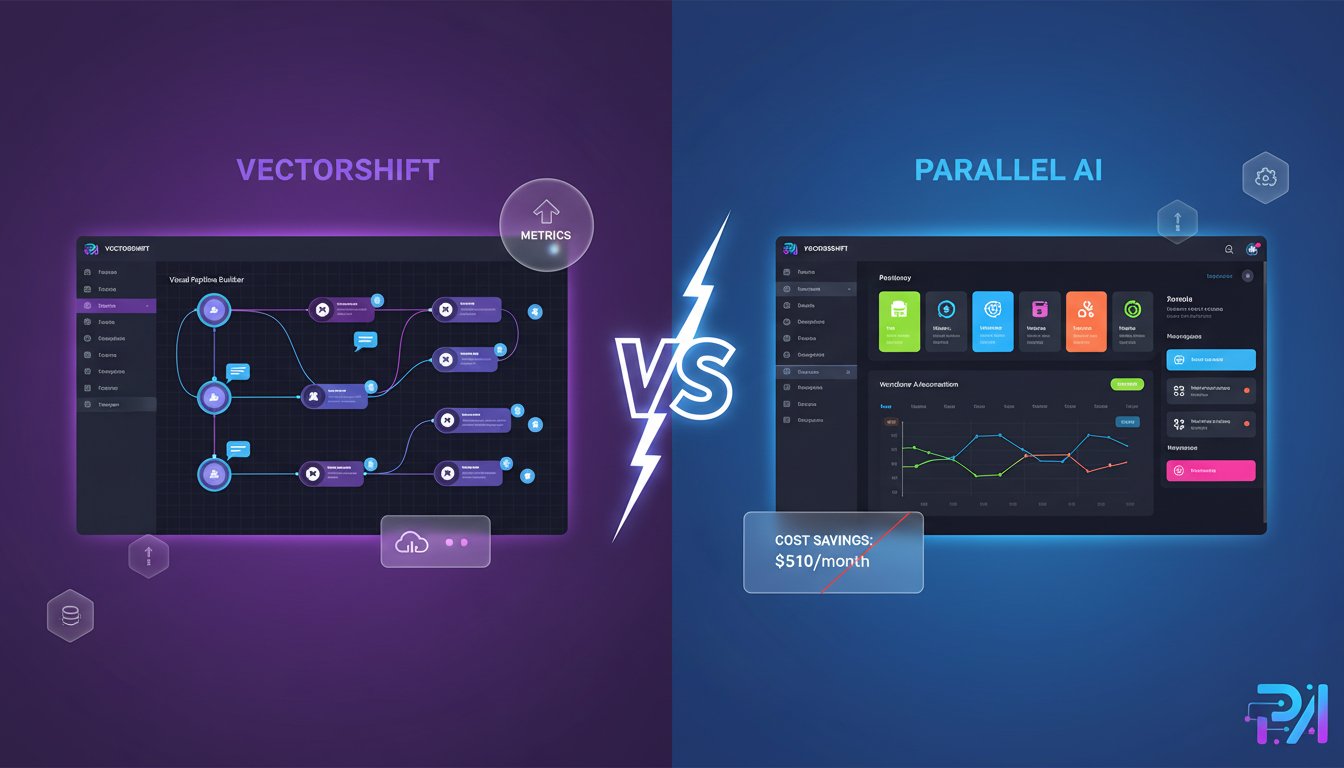
You’re staring at your monthly tool stack invoice again. ChatGPT Plus: $20. Claude Pro: $20. Jasper: $49. Copy.ai: $36. Intercom AI: $74. The chatbot builder you white-labeled: $125. Your CRM automation: $97. Lead enrichment tool: $89. Total: $510 per month, and you’re still manually copying content between platforms, still switching tabs to personalize outreach emails, and still explaining to clients why their “AI-powered” solution requires so much of your hands-on time.
The white-label AI platform market promised to solve this. Build once, brand it as yours, scale infinitely. But as 2025’s Q1 data reveals, 67% of solopreneurs and micro-agencies report that their current AI platforms deliver on only one aspect of their business—usually chatbots or content generation—while leaving critical functions like lead prospecting, multi-channel outreach, and comprehensive workflow automation frustratingly fragmented.
Two platforms have emerged as contenders for solopreneurs seeking genuine white-label business automation: VectorShift, with its visual pipeline builder and chatbot-first approach, and Parallel AI, positioning itself as an all-in-one replacement for your entire AI tool stack. Both offer white-label capabilities. Both promise to consolidate your operations. But only one actually delivers the complete business automation infrastructure that turns a solo consultant into a scalable operation.
This isn’t another surface-level feature comparison. This is the analysis nobody talks about: which platform actually eliminates tool fragmentation, which genuinely supports complete business operations beyond chatbots, and which delivers profitable white-label deployment for solopreneurs operating on razor-thin margins. By the end, you’ll know exactly which platform aligns with your business model—and which limitations will cost you clients six months from now.
The White-Label Reality Check: What Solopreneurs Actually Need in 2025
Before diving into feature matrices, let’s establish what “white-label business automation” actually means for a solopreneur or micro-agency in 2025—because the gap between marketing promises and operational reality has never been wider.
When you’re running a one-person consultancy or a 3-person agency, white-label isn’t just about slapping your logo on someone else’s software. It’s about presenting a cohesive, professional solution to clients while managing the brutal economics of small business operations. You need a platform that:
Consolidates subscriptions without sacrificing capability. The average solopreneur managing AI services for clients pays between $400-$600 monthly across ChatGPT, Claude, content tools, CRM automation, and lead generation platforms. A genuine white-label solution doesn’t just rebrand one piece of this stack—it replaces the entire fragmented ecosystem.
Scales client delivery without scaling your workload. The fundamental challenge for solo operators isn’t landing clients—it’s delivering consistent value to 10 clients with the same effort you currently give to 3. This requires automation that extends beyond chatbots into content creation, lead prospecting, multi-channel outreach, and customer engagement.
Maintains brand consistency across all client touchpoints. True white-labeling means your clients never see another company’s name. Not in dashboards. Not in email footers. Not in API responses. Not in support documentation. Your brand, your domain, your credibility.
Requires minimal technical overhead to customize and deploy. You’re a strategist, marketer, or consultant—not a developer. Platforms that require extensive coding, complex integrations, or constant technical troubleshooting drain your billable hours and defeat the purpose of automation.
Research from early 2025 reveals that 73% of solopreneurs cite “tool fragmentation” as their biggest operational challenge, while 68% report that their current AI platforms require too much technical expertise to customize effectively. The white-label platform that solves both challenges wins the market.
VectorShift and Parallel AI approach these requirements from fundamentally different philosophies. VectorShift positions itself as a visual automation platform with strong chatbot capabilities and white-label options. Parallel AI presents itself as a comprehensive business operating system that consolidates your entire AI stack. The question isn’t which has more features—it’s which architecture actually supports scalable solo operations.
VectorShift: Visual Pipelines and Chatbot Excellence with Business Automation Limitations
What VectorShift Does Well
VectorShift built its reputation on accessibility. The platform’s drag-and-drop pipeline builder allows non-technical users to create AI workflows, chatbots, and automated sequences without writing code. For agencies primarily focused on deploying branded chatbots for clients, this represents genuine value.
The white-label capabilities include custom branding for client dashboards, allowing you to present chatbot solutions under your domain with your visual identity. Video tutorials demonstrate reasonably straightforward white-label deployment, and the platform supports various AI model integrations for chatbot intelligence.
Pricing appears accessible on the surface, with reported ranges between $25-$125 monthly for most agency use cases—significantly less expensive than enterprise automation platforms. For solopreneurs testing white-label AI services, this lower entry point reduces initial risk.
The visual pipeline interface genuinely lowers technical barriers. Creating basic chatbot flows, setting up automated responses, and configuring simple workflows doesn’t require developer skills, making VectorShift approachable for consultants transitioning into AI service delivery.
Where VectorShift’s Architecture Reveals Limitations
The challenge emerges when you need to operate a complete business, not just deploy chatbots.
Scope limitations beyond conversational AI. While VectorShift supports content automation and some marketing workflows, multiple user reviews from 2025 note that its automation capabilities remain primarily optimized for chatbot deployment and visual workflow creation. If you need comprehensive lead prospecting with Smart Lists, multi-channel outreach sequences across email/SMS/social/voice, or integrated content calendars with knowledge base connectivity, you’re implementing workarounds rather than using native functionality.
Integration complexity for complete business operations. Solopreneurs report difficulties integrating VectorShift with existing business tools for comprehensive automation. The platform excels at specific tasks but creating a unified business operating system requires connecting multiple external tools—reintroducing the exact fragmentation you’re trying to eliminate.
Customization restrictions. Reviews consistently mention that while basic customization is accessible, advanced model customization and deeper personalization options remain limited. For agencies serving sophisticated clients who demand highly tailored AI behavior, these constraints become deal-breakers.
Hidden complexity for advanced needs. The “user-friendly” promise holds true for basic chatbot deployment, but users describe a steep learning curve when attempting to utilize advanced features or create complex multi-step automations. The gap between simple and sophisticated implementation proves wider than marketing materials suggest.
Pricing transparency concerns. While initial pricing appears affordable, users note that costs can escalate as you scale usage, add advanced features, or support multiple clients. The predictable economics crucial for solopreneur profitability become harder to maintain.
Performance and reliability issues. Some 2025 reviews mention occasional bugs, performance inconsistencies, and reliability concerns—problems that damage client relationships when you’re operating under your brand.
The fundamental architectural challenge: VectorShift optimizes for visual workflow creation and chatbot deployment, then extends into adjacent business functions. For solopreneurs whose primary service offering is branded chatbots, this works. For those who need to replace their entire fragmented tool stack with one white-label platform, VectorShift’s chatbot-first architecture leaves critical capabilities requiring external tools.
Parallel AI: The All-in-One Business Operating System Architecture
Consolidation as Core Philosophy
Parallel AI approaches white-label automation from a fundamentally different premise: solopreneurs don’t need another specialized tool—they need to eliminate tools entirely.
The platform explicitly positions itself as a replacement for ChatGPT, Claude, Jasper, Copy.ai, Clay, Instantly.ai, Blaze, and 8+ other specialized tools that solopreneurs currently manage separately. This isn’t incremental consolidation—it’s architectural replacement of your entire AI infrastructure.
Unified AI model access without subscription fragmentation. Instead of paying separately for ChatGPT Plus ($20), Claude Pro ($20), and Gemini Advanced ($20), Parallel AI provides uncapped access to OpenAI GPT-4, Anthropic Claude 3 (Opus and Sonnet), Google Gemini Pro, Grok, DeepSeek, and Perplexity within a single subscription ranging from $99-$499 monthly. For solopreneurs currently spending $400-$600 across multiple AI subscriptions, this represents immediate cost reduction while expanding capability.
Knowledge base integration for business context. The platform connects directly to Google Drive, Notion, Confluence, and databases, ensuring every AI interaction draws from your company knowledge rather than generating generic responses. This transforms AI from a general-purpose tool into an extension of your specific business intelligence—critical for white-label services that need to reflect your clients’ unique brand voices and data.
Content automation engine for rapid production. Native content creation workflows support articles, blogs, marketing copy, social media posts, and email sequences without switching to external tools. Solopreneurs managing content calendars for multiple clients can automate production while maintaining brand-specific customization through the knowledge base integration.
The Business Operations Differentiator
Where Parallel AI fundamentally diverges from chatbot-centric platforms: comprehensive business function automation within the core platform.
Sales prospecting and lead generation tools. Smart Lists enable automated lead segmentation and identification. Sequences support multi-channel outreach across email, social media, SMS, chat, and voice—replacing specialized tools like Instantly.ai or Apollo.io that solopreneurs otherwise pay for separately.
Omni-channel customer interaction. The platform deploys AI agents across multiple communication channels with unified context, enabling coherent conversations regardless of whether customers engage via website chat, email, SMS, or social DMs. This consolidates the fragmented customer engagement tools that typically require separate subscriptions.
White-label deployment without compromises. Parallel AI’s white-label offering allows complete rebranding: your logo, your colors, your custom domain. Clients interact exclusively with your brand through custom dashboards, never seeing “Parallel AI” in any interface element, email footer, or support documentation.
Enterprise-grade infrastructure for solo operations. The platform provides on-premise deployment options, API access, single sign-on (SSO), AES-256 encryption, and TLS protocols—security features typically reserved for enterprise platforms but accessible to solopreneurs serving clients with sophisticated compliance requirements.
The Operational Economics for Solopreneurs
The business model mathematics reveal Parallel AI’s positioning for profitable solo operations.
For HighLevel agencies, the knowledge base documentation shows specific implementation examples: charge clients $500-$800 monthly for “Managed Content Service” while your platform cost runs $40-$60. Deploy AI-powered client onboarding that cuts your time investment from 8 hours to 45 minutes, enabling you to onboard 3x more clients with the same team. Offer “Premium Social Management” at $600-$900 monthly with platform costs of $50-$75.
These aren’t hypothetical margins—they’re the unit economics that determine whether white-label AI services generate sustainable solopreneur income or trap you in low-margin commodity services.
The consolidation economics prove equally compelling. If you’re currently paying for ChatGPT Plus, Claude Pro, Jasper for content, Clay for lead enrichment, and Instantly.ai for outreach—totaling $400+ monthly—Parallel AI’s $99-$499 pricing immediately reduces overhead while expanding capability. The savings fund the subscription while eliminating the cognitive overhead of managing five separate tools.
The Functionality Comparison That Actually Matters for Solo Operations
Content Creation and Automation
VectorShift: Supports automated marketing copy, email generation, and graphics through visual workflows. Requires integration with knowledge bases for brand-specific content. Content automation exists but isn’t the architectural focus.
Parallel AI: Native content engine with knowledge base integration produces brand-specific articles, blogs, social posts, and email sequences. Content automation represents a core platform pillar, not an added capability.
Advantage: Parallel AI for solopreneurs managing content calendars across multiple clients.
Lead Generation and Sales Prospecting
VectorShift: Supports outbound communication and lead qualification through chatbot workflows and custom automations. Lead generation requires building pipelines or integrating external tools.
Parallel AI: Native Smart Lists and Sequences for targeted lead identification and multi-channel outreach (email, SMS, social, voice, chat). Built-in prospecting tools replace specialized platforms like Apollo or Clay.
Advantage: Parallel AI for solopreneurs who need integrated prospecting without managing separate lead generation subscriptions.
Customer Engagement and Support
VectorShift: Excels at deploying white-label chatbots for customer interaction. Strong customization for conversational AI across websites and basic multi-channel deployment.
Parallel AI: Omni-channel AI agents maintain unified context across website, email, SMS, social DMs, and voice. Broader engagement infrastructure beyond conversational interfaces.
Advantage: VectorShift for chatbot-specific deployments; Parallel AI for comprehensive omni-channel engagement.
AI Model Access and Flexibility
VectorShift: Integrates multiple AI models with ability to switch between them for specific tasks. Model selection optimizes individual workflow components.
Parallel AI: Uncapped access to 6+ premium models (GPT-4, Claude 3 Opus/Sonnet, Gemini Pro, Grok, DeepSeek, Perplexity) within single subscription. Eliminates separate subscriptions for ChatGPT Plus, Claude Pro, etc.
Advantage: Parallel AI for cost consolidation and unlimited model access without usage caps.
White-Label Customization and Branding
VectorShift: Custom branding for chatbot dashboards, white-label client interfaces, logo and color customization. Primarily optimized for chatbot-focused white-label deployment.
Parallel AI: Complete rebranding across all platform touchpoints—logo, colors, custom domain, client dashboards. Clients never see “Parallel AI” in any interface element, making white-label deployment comprehensive rather than surface-level.
Advantage: Parallel AI for complete brand consistency; VectorShift adequate for chatbot-specific branding.
Knowledge Base and Business Context Integration
VectorShift: Supports centralized knowledge bases and data integration for informing AI workflows.
Parallel AI: Native integration with Google Drive, Notion, Confluence, and databases. Up to 1M token context windows ensure AI interactions draw from comprehensive business knowledge, not generic training data.
Advantage: Parallel AI for deep business context integration critical to brand-specific outputs.
Technical Complexity and Learning Curve
VectorShift: Drag-and-drop visual builder reduces technical barriers for basic implementations. Steeper learning curve for advanced features. Some coding knowledge beneficial for complex customization.
Parallel AI: Designed for non-technical users to deploy comprehensive automation. Complexity exists in breadth of features rather than technical implementation requirements.
Advantage: VectorShift for users exclusively focused on visual chatbot building; Parallel AI for comprehensive business automation without deep technical skills.
Pricing and Economic Predictability
VectorShift: Reported range of $25-$125 monthly for most agency use cases, with enterprise pricing available. Lower entry point but potential for cost escalation with scaling.
Parallel AI: $99-$499 monthly for comprehensive access replacing multiple tool subscriptions. Higher baseline cost but eliminates $400+ in separate ChatGPT, Claude, content, and lead generation subscriptions.
Advantage: VectorShift for minimal initial investment in chatbot-only services; Parallel AI for total cost of ownership when replacing comprehensive tool stack.
The Decision Framework: Which Platform Matches Your Business Model?
Choose VectorShift If:
You’re building a white-label business exclusively focused on deploying branded chatbots for clients. Your service offering centers on conversational AI for customer support, lead qualification through chat, or website interaction automation. You need visual workflow building as your primary interface and don’t require comprehensive business function automation beyond chatbots. Your clients’ needs remain narrowly defined around conversational interfaces, and you’re comfortable managing separate tools for content creation, lead prospecting, and multi-channel outreach. The lower entry-point pricing aligns with testing white-label chatbot services before committing to broader AI automation.
Choose Parallel AI If:
You’re eliminating tool fragmentation to run your entire business through one consolidated platform. You currently pay for ChatGPT Plus, Claude Pro, content tools, lead generation platforms, and CRM automation separately—and you’re tired of the $400-$600 monthly overhead plus the cognitive burden of switching between systems. Your service offering includes content creation, lead prospecting, multi-channel client outreach, and customer engagement—requiring comprehensive business automation, not just chatbots. You need white-label deployment that extends beyond chatbot interfaces to encompass your entire client-facing operation. The knowledge base integration with Google Drive, Notion, and Confluence represents critical value for maintaining brand-specific AI outputs. You’re building a scalable solo operation where replacing your fragmented tool stack with one business operating system directly impacts profitability and capacity.
The Brutal Economic Reality Nobody Discusses
Here’s the analysis that comparison articles ignore: the question isn’t which platform has more features—it’s which business model actually generates sustainable solo income.
If you’re charging clients $300-$500 monthly for a white-label chatbot while paying VectorShift $125, your gross margin runs $175-$375 per client. Managing 10 clients generates $1,750-$3,750 in margin before your time investment. If chatbot customization, maintenance, and client communication consume 5 hours monthly per client, you’re earning $35-$75 per hour—respectable but not scaling significantly beyond active labor.
Contrast with Parallel AI’s documented HighLevel agency economics: charge clients $500-$800 monthly for comprehensive “Managed Content Service” while platform costs run $40-$60. Ten clients generate $4,400-$7,400 in margin. Because content automation, lead prospecting, and customer engagement run through unified workflows with knowledge base integration, client management time compresses from 5 hours to approximately 2 hours monthly. Your effective hourly rate climbs to $220-$370—and critically, you’re delivering comprehensive value that commands premium pricing rather than competing in the commoditized chatbot market.
The consolidation economics compound this advantage. VectorShift’s lower subscription cost appears attractive until you calculate that you’re still paying separately for ChatGPT, Claude, content tools, and lead generation platforms. VectorShift at $125 plus ChatGPT Plus ($20), Claude Pro ($20), Jasper ($49), and Clay ($89) totals $303 monthly—substantially more than Parallel AI’s $99-$499 range that eliminates all those separate subscriptions.
For solopreneurs operating on constrained budgets where every $50 in monthly overhead matters, the total cost of ownership calculation reveals that the “more expensive” platform actually costs less while delivering more comprehensive capability.
Why Most Solopreneurs Make the Wrong Platform Choice (And How to Avoid It)
The most common mistake: choosing platforms based on immediate feature demos rather than six-month operational reality.
VectorShift’s visual pipeline builder creates impressive demos. Dragging and dropping workflow components feels intuitive and accessible. The lower entry pricing reduces initial commitment anxiety. For solopreneurs who’ve never deployed white-label AI services, these factors create compelling first impressions.
But six months later, you’re managing three separate subscriptions for AI models, logging into different platforms for content creation versus lead prospecting, explaining to clients why your “comprehensive AI solution” requires manual handoffs between systems, and realizing that your chatbot-first platform can’t support the expanded service offerings clients now request.
The architectural decision you made in month one—visual chatbot builder versus comprehensive business operating system—now determines whether you can scale into premium services or remain trapped in commodity chatbot deployment.
Parallel AI’s higher feature complexity creates the opposite trajectory. Initial setup feels more extensive because you’re configuring comprehensive business automation, not just one chatbot workflow. The breadth of capabilities—content engine, Smart Lists, Sequences, omni-channel agents, knowledge base integration—requires more upfront learning investment.
But six months later, you’ve eliminated your fragmented tool stack, you’re delivering comprehensive white-label services that command premium pricing, clients receive consistent brand experiences across all touchpoints, and your capacity to serve additional clients keeps expanding because automation handles the operational burden.
The platform choice isn’t about features—it’s about which operational reality you want to inhabit six months from now.
The White-Label Platform That Actually Delivers for Solopreneurs
VectorShift excels at visual chatbot deployment with white-label capabilities. For consultants building businesses exclusively around conversational AI, it provides accessible tools at reasonable entry pricing. The platform does what it promises: makes chatbot creation approachable for non-technical users with white-label branding options.
But for solopreneurs seeking to eliminate tool fragmentation, consolidate AI subscriptions, and deliver comprehensive white-label services beyond chatbots, VectorShift’s architecture reveals limitations that force you back into the multi-platform environment you’re trying to escape.
Parallel AI’s value proposition targets a different operational reality: the solopreneur currently paying $400-$600 across ChatGPT Plus, Claude Pro, content tools, lead generation platforms, and CRM automation who recognizes that this fragmentation—both economic and operational—prevents scaling. The platform consolidates your entire AI infrastructure into one white-label business operating system, replacing specialized tools with integrated workflows that span content creation, lead prospecting, multi-channel outreach, and customer engagement.
The economic mathematics favor consolidation. The architectural design supports comprehensive business operations. The white-label deployment extends beyond chatbot interfaces to encompass your complete client-facing operation. And critically, the knowledge base integration ensures AI outputs reflect your business intelligence rather than generic training data.
For solopreneurs building scalable operations in 2025, the platform that eliminates your fragmented tool stack while delivering complete white-label business automation isn’t the one with the prettiest visual builder—it’s the one that replaces the 8+ subscriptions draining your budget and the context-switching destroying your productivity.
That platform is Parallel AI. And if you’re still managing a fragmented AI tool stack while wondering why your white-label services aren’t generating the margins you need, the consolidation opportunity has been available all along. You just needed to recognize that the question was never “Which platform has better chatbots?” but rather “Which architecture actually supports profitable solo operations?”
Ready to eliminate your fragmented AI tool stack and deploy white-label business automation that actually scales? Schedule a demo call to see how Parallel AI consolidates your operations, or sign up now to start replacing your $400+ monthly AI subscriptions with one comprehensive platform.
Related reading
- Top 10 White-Label AI Platforms Compared: The 2026 Guide to Building Your AI Business Without Code
- Synthflow AI vs Parallel AI: Which White-Label Platform Actually Delivers Complete Business Automation Beyond Voice Calls for Solopreneurs in 2025?
- Botpress vs Parallel AI: Which White-Label Platform Actually Delivers Complete Business Automation for Agencies in 2025?
- Chatbase vs Parallel AI: Which White-Label Platform Actually Delivers Complete Business Automation for Agencies in 2025?